
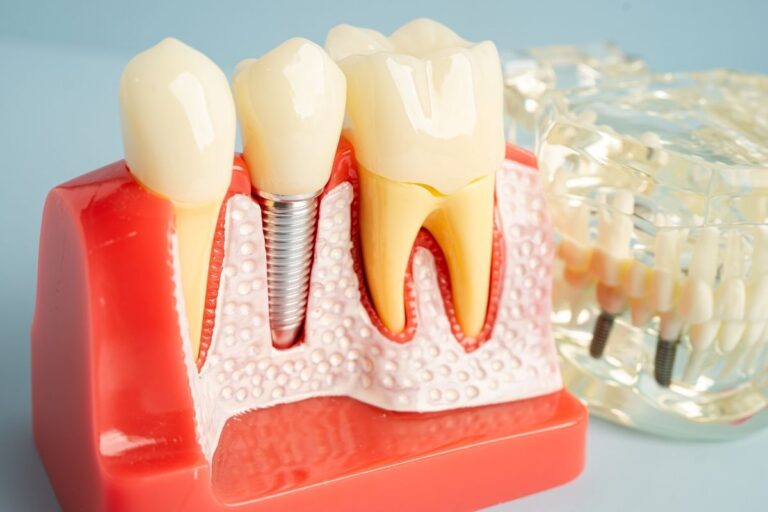
If you are missing a tooth, you may have noticed your other teeth shifting. Dental implants in Brooklyn provide an effective solution to prevent this by filling in the gap and stabilizing the surrounding teeth. According to the American Dental Association (ADA), implants have a 95% success rate over 10 years, making them a highly reliable solution. This not only restores the function of your bite but also maintains the integrity of your smile.
How Dental Implants Help Prevent Teeth from Shifting After Tooth Loss
After a tooth is lost, the surrounding teeth often shift into the space left by the missing tooth. This can lead to bite issues, misalignment, and even further tooth loss. Prosthetic teeth act as artificial tooth roots, securely placed in the jawbone. They fuse with the bone, creating a stable foundation that prevents neighboring teeth from drifting out of place. By filling the gap, they preserve the alignment of your remaining teeth, ensuring your smile stays functional and aesthetically pleasing.
Dental Implants can improve your quality of life by providing a stable foundation that helps prevent the shifting of surrounding teeth, offering functional and aesthetic benefits. This stability ensures that your teeth stay in place, preventing long-term alignment issues.
How Do Dental Implants Function To Stabilize Teeth Alignment?
Prosthetic teeth are made to replicate the natural tooth structure, serving as permanent replacements that fuse with the bone, providing unmatched stability. Here’s how they work:
- A Root-Like Foundation
The fixtures are surgically placed into the jawbone, where they fuse with the bone through a process called osseointegration. This process creates a stable, durable foundation that prevents adjacent teeth from drifting into the space left by the lost tooth.
- Preventing Tooth Shifting
By replacing the missing tooth root, they prevent surrounding teeth from shifting into the gap. Implants not only restore the missing tooth but also ensure that the surrounding teeth stay in their optimal position, maintaining your bite’s alignment.
- Bone Preservation
When a tooth is lost, the bone in the jaw begins to deteriorate due to a lack of stimulation from chewing. Artificial tooth roots restore that stimulation, preserving the jawbone and preventing bone loss, which further helps stabilize surrounding teeth.
Dental Implants vs Other Tooth Replacement Options for Alignment Support
Dental implants offer clear advantages over other tooth-replacement options. Here’s how they compare:
- Stability: They are securely placed in the jawbone, providing strength and a natural feel, unlike bridges or dentures, which can shift or become loose over time.
- No Damage to Neighboring Teeth: Unlike bridges, which rely on nearby teeth for support, implants don’t require altering healthy teeth.
- Bone Health: It helps preserve the jawbone by stimulating bone growth, something that dentures and bridges do not do.
In the long run, artificial tooth roots are the most effective solution for maintaining both your smile and oral health.
Secure Your Smile With Fixed Dental Implants
Dental implants in Brooklyn are highly effective not only for replacing missing teeth but also for maintaining the stability of your surrounding teeth. By preventing shifting and preserving bone density, they ensure the long-term health and function of your smile. If you’re considering getting artificial tooth roots to resolve your missing tooth issue, it’s essential to consult with our qualified dental professional. They will guide you through the process and recommend the best treatment plan for your needs.
To learn more about how this treatment can stabilize your remaining teeth and improve your smile, visit our dental office at Metropolitan Dental Arts. Our team will help you explore all available options and ensure you receive the personalized care you deserve.
Book an appointment today to reestablish your smile and keep your teeth in place for the long term.