Filling the Gap Left by Missing Teeth
A missing tooth affects more than the way your smile looks, it can also change the way you chew, speak, and how your surrounding teeth shift over time. At Metropolitan Dental Arts, we use dental bridges to fill that space with a fixed restoration that stays in place permanently, rather than an appliance you remove each night.
Patients throughout Williamsburg, Greenpoint, and the wider Brooklyn area choose a bridge when they’re missing one or more teeth and want a solution anchored securely by the teeth or implants on either side of the gap. The result restores both the function and the appearance of a complete smile.
Schedule a Bridge ConsultationWhat a Dental Bridge Is Made Of
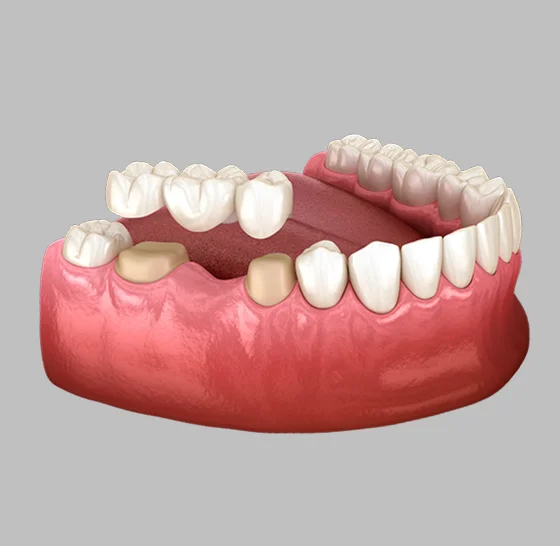
A dental bridge is made up of one or more replacement teeth, called pontics, held in place by crowns attached to the teeth or implants on either side of the gap. Those supporting teeth, known as abutments, anchor the bridge securely so it stays fixed in place rather than shifting during everyday use.
Bridges are custom-made from durable, tooth-colored materials designed to match the shade and shape of your surrounding teeth. Once placed, a bridge functions much like your natural teeth, letting you chew, speak, and smile without thinking twice about the gap that used to be there.
Signs a Bridge Might Be Right for You
A bridge isn’t the only way to replace a missing tooth, but it’s often a strong option in certain situations.
- You’re missing one or more teeth in a row
- The teeth on either side of the gap are healthy enough to support a crown
- You’d prefer a fixed solution over a removable one
- You’re not a candidate for dental implants at this time
- Shifting teeth or bite changes have started to develop since losing a tooth
Getting Your Dental Bridge, Step by Step
Placing a dental bridge typically takes place over two visits, giving our lab time to craft a restoration that fits precisely. Here’s what the process looks like.
01. Initial Consultation and Planning
The dentist examines the gap, evaluates the health of the surrounding teeth, and determines whether a bridge is the right fit for your situation.
02. Preparing the Abutment Teeth
The teeth on either side of the gap are reshaped to support crowns, creating a stable foundation for the bridge.
03. Taking Impressions
A detailed impression or digital scan of your teeth is taken and sent to a lab, where your custom bridge is crafted to match your bite and smile.
04. Wearing a Temporary Bridge
While your permanent bridge is being made, a temporary bridge protects the prepared teeth and keeps you comfortable in the meantime.
05. Placing the Permanent Bridge
Once ready, your permanent bridge is checked for fit and comfort, then cemented securely into place.
Why Replacing a Missing Tooth Matters
Leaving a gap from a missing tooth unaddressed can affect more than just your smile. Neighboring teeth often begin to shift into the space over time, which can throw off your bite and make those teeth harder to clean properly. The opposing tooth in your other arch can also over-erupt, growing slightly longer since it no longer meets resistance from a tooth below or above it. These changes can lead to jaw discomfort, uneven wear, and a higher risk of further tooth loss down the road.
At Metropolitan Dental Arts, we often recommend addressing a missing tooth sooner rather than later, since a bridge placed early tends to be a more straightforward, predictable process than correcting years of shifting afterward.
Caring for Your Dental Bridge
Caring for a dental bridge is straightforward, though it does require a bit more attention underneath the pontic where it meets the gumline. Brushing twice a day and flossing daily, using a floss threader or water flosser to clean beneath the bridge, helps prevent decay around the abutment teeth.
Routine cleanings and exams at Metropolitan Dental Arts give our team a chance to check the fit of your bridge and the health of the teeth supporting it. With consistent care, a well-made bridge can last a decade or longer before it needs to be replaced. Avoiding extremely hard or sticky foods also helps protect the bridge from unnecessary stress over time.
Complete Your Smile with a Dental Bridge
If you’re missing one or more teeth, a dental bridge could be a straightforward way to restore your bite and your smile. Book online or call our Williamsburg office to schedule a consultation with our team.
Request an AppointmentFrequently Asked Questions About Dental Bridges
Most patients complete treatment in two visits, spaced a couple of weeks apart while your custom bridge is crafted. At our Williamsburg office, your first visit covers preparation and impressions, and your second visit is for placing the permanent bridge.
Cost varies depending on the number of teeth being replaced and the materials used. During your consultation at Metropolitan Dental Arts, our team will walk you through pricing and any insurance coverage that applies before you commit to treatment.
The procedure is done under local anesthesia, so preparing the abutment teeth shouldn’t cause pain. Patients at our Brooklyn practice typically describe the process as similar to getting a crown, with only mild soreness afterward.
With good oral hygiene and regular checkups at Metropolitan Dental Arts, a dental bridge can last ten years or longer. How long yours lasts depends on how well the supporting teeth and gums are maintained over time.
Yes. A single bridge can span multiple missing teeth in a row, as long as the remaining teeth on either side of the gap are healthy enough to support it. Our Williamsburg team can evaluate whether your case is a good fit during a consultation.
Waiting can allow nearby teeth to shift into the gap over time, which may complicate treatment later. Our team at Metropolitan Dental Arts generally recommends addressing a missing tooth as soon as it’s practical for you.
Yes. Bridges placed at our Brooklyn office are custom-shaded and shaped to match your surrounding teeth, so the restoration blends in with the rest of your smile.
Many dental insurance plans offer partial coverage for bridges, though the amount varies by provider. Our team at Metropolitan Dental Arts can help verify your specific benefits before you begin treatment.