
A missing front tooth can change the way you smile, speak, and feel about your appearance. Because front teeth are highly visible, replacing one involves more than filling a gap. The replacement should blend with surrounding teeth while supporting everyday activities such as biting and speaking. Dental implants offer one option for restoring both the appearance and function of a missing front tooth.
However, achieving a natural-looking result requires careful planning. Tooth shape, gum contours, color, and the condition of the jawbone all influence the final outcome. Understanding these factors can help you make an informed decision about tooth replacement.
Why Front Tooth Replacement Requires Careful Planning
Front teeth play an important role in your smile and help you bite into foods such as apples and sandwiches. They also influence certain speech sounds. When one is missing, the gap may be noticeable during conversations, photographs, and everyday interactions. Replacing a front tooth presents specific challenges because the restoration is easy to see. The replacement should match the size, shape, and shade of neighboring teeth. The surrounding gum tissue also needs to frame the new tooth naturally.
With dental implants, the goal is to create a restoration that looks consistent with your existing smile while providing a stable foundation for normal function.
How Dental Implants Replace Missing Front Teeth
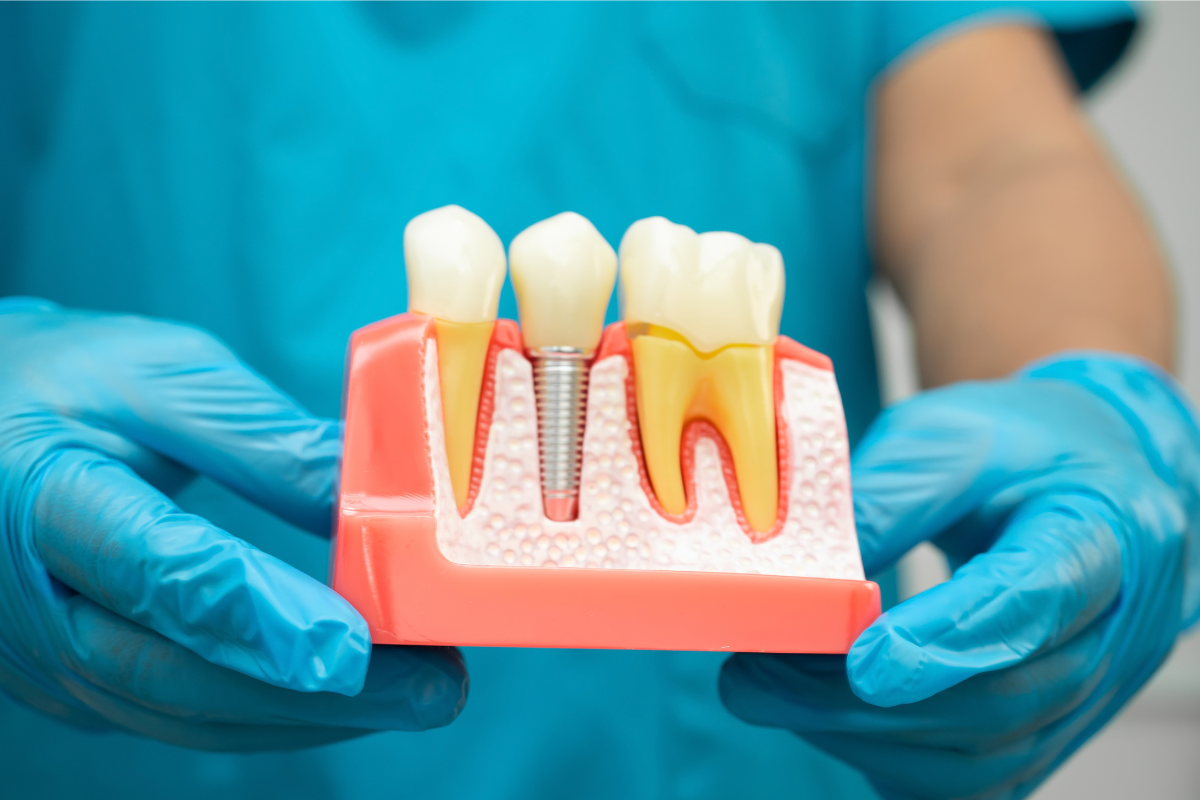
A dental implant typically consists of three components that work together to replace a missing tooth.
- Implant post: A small fixture, usually made of titanium, placed in the jawbone to serve as an artificial tooth root.
- Abutment: A connector that attaches the implant post to the replacement tooth.
- Custom crown: The visible portion designed to resemble a natural tooth in shape, size, and color.
After placement, the implant needs time to integrate with the surrounding bone. Once healing progresses sufficiently, the dentist can attach the final restoration according to the treatment plan. Unlike a traditional dental bridge, a single-tooth implant does not generally require support from adjacent teeth. It can also help maintain the jawbone around the missing tooth by providing stimulation through the implant.
What Makes a Front Tooth Implant Look Natural?
The appearance of a front tooth implant depends on several details that your dental team evaluates before treatment.
Matching the Color and Shape
A crown that looks too bright, too wide, or differently shaped may stand out from neighboring teeth. Your dentist considers the color, proportions, surface characteristics, and overall appearance of your natural teeth when planning the restoration.
Maintaining Healthy Gum Contours
The gum tissue surrounding the implant contributes significantly to the final appearance. Gum recession, existing tissue damage, or bone loss may affect how naturally the crown fits into your smile. These concerns should be assessed before treatment begins.
Evaluating Bone and Gum Health
Adequate bone is important for supporting an implant. If bone loss has occurred, a bone graft may be recommended in some cases. Gum health also matters because inflammation and periodontal disease can affect implant stability over time.
A thorough examination and appropriate imaging help your dentist determine whether additional treatment is needed before implant placement.
What to Expect During Dental Implant Treatment in Brooklyn
The process generally begins with a consultation, during which the dentist reviews your dental history, examines your mouth, and evaluates the bone and surrounding tissues. This helps determine whether an implant is suitable for your situation. If treatment proceeds, the implant post is placed in the jawbone. A healing period follows while the implant integrates with the bone. Depending on your oral health and the treatment plan, a temporary tooth may be used to help manage the appearance of the gap during healing. Once the implant is sufficiently stable, the dentist places the custom crown and checks its fit, appearance, and bite.
The complete timeline varies. Some patients need additional procedures or longer healing periods, so the final tooth may not be placed immediately after implant surgery. For patients considering dental implant treatment in Brooklyn, a personalized evaluation can clarify the expected stages, timeline, and available options.
How to Care for Your Front Tooth Implant
Good oral hygiene helps protect the gums and tissues surrounding an implant. Brush twice daily with a soft-bristled toothbrush, clean between your teeth every day, and attend regular dental checkups. Avoid using your front teeth to open packaging or bite down on hard objects. These habits can damage natural teeth as well as implant crowns. Contact our dentist if you notice persistent bleeding, swelling, discomfort, or movement around the restoration. Early evaluation can help identify problems before they become more serious.
Making an Informed Decision About Implant Dentistry
Front tooth replacement involves both appearance and long-term function. Although dental implants can provide a stable, natural-looking solution, they are not suitable for every patient. Gum health, bone availability, medical history, and personal treatment goals all influence the decision. A dental professional can explain whether an implant, bridge, or another restoration is appropriate for your needs. With careful planning and consistent maintenance, the chosen treatment can help restore your smile and support everyday oral function.
If you are considering replacing a missing front tooth, schedule an appointment with Metropolitan Dental Arts in Brooklyn to discuss your tooth replacement options and determine which approach best suits your oral health needs.
FAQs
1. Do dental implants for front teeth look natural?
They can look very natural when the crown is carefully designed to match surrounding teeth and the gum tissue is healthy. The final appearance depends on factors such as bone support, gum contours, crown design, and healing.
2. How long does it take to get a front tooth implant?
The process often takes several months because the implant needs time to integrate with the jawbone. Additional procedures, healing needs, and individual oral health conditions can affect the overall timeline.
3. Is getting a front tooth dental implant painful?
The procedure is performed with anesthesia to manage discomfort. Some soreness, swelling, or tenderness afterward is common, but your dentist can explain appropriate aftercare and pain management options.
4. Can I get a temporary tooth while my implant heals?
In many cases, a temporary tooth can be provided to help maintain the appearance of your smile during healing. Whether this is appropriate depends on implant stability, bite forces, and your individual treatment plan.
5. Am I a candidate for front tooth dental implants?
You may be a candidate if you have suitable bone support and healthy gums. A dentist will evaluate your oral health, medical history, and any need for preparatory treatment before recommending an implant.
6. How do I maintain a front tooth implant?
Brush twice daily, clean between your teeth, attend regular dental visits, and follow your dentist’s recommendations. Avoid biting hard objects with the implant crown, and seek an evaluation if you notice discomfort or changes around the implant.