Advanced Endodontic Care to Preserve Your Natural Tooth
Endodontics is the branch of dentistry focused on treating problems inside a tooth, specifically the pulp, the soft tissue containing nerves and blood vessels at its center. At Metropolitan Dental Arts, our in-house endodontist handles everything from routine root canal therapy to more complex retreatment and surgical procedures, without the need for an outside referral.
Patients throughout Williamsburg, Greenpoint, and the wider Brooklyn area turn to our team when a tooth is infected, injured, or causing persistent pain that other treatment hasn’t resolved. The goal of endodontic treatment is almost always the same, saving your natural tooth rather than moving straight to extraction.
Schedule an Endodontic ConsultationWhen Endodontic Treatment Becomes Necessary
Treatment starts with a digital impression of your teeth, which our team uses to map out exactly which teeth need to move and when, without any traditional putty impressions involved. From there, a series of custom clear aligners is created, each one nudging your teeth a little closer to their final position. You’ll switch to a new set roughly every couple of weeks, and periodic visits with our team help make sure treatment is staying on track throughout the process. Because each aligner is designed around your specific digital scan, the whole series works together toward the smile preview you saw at the very start.
Common warning signs include lingering sensitivity to hot or cold, pain when chewing or applying pressure, swelling in the gums near a specific tooth, or a tooth that has visibly darkened. If you’re noticing any of these symptoms, an evaluation can determine whether endodontic treatment is the right next step.
Endodontic Treatments We Offer
Root canal therapy is the most common endodontic procedure, but it isn’t the only one our in-house endodontist provides.
- Root canal therapy, to remove infected pulp and save the natural tooth
- Endodontic retreatment, for a tooth that needs a second round of treatment after a previous root canal
- Apicoectomy, a minor surgical procedure to treat infection at the very tip of a tooth’s root
- Internal bleaching, to address discoloration in a tooth that’s already had root canal treatment
- Treatment for traumatic dental injuries affecting the internal structure of a tooth
What Happens During Root Canal Therapy
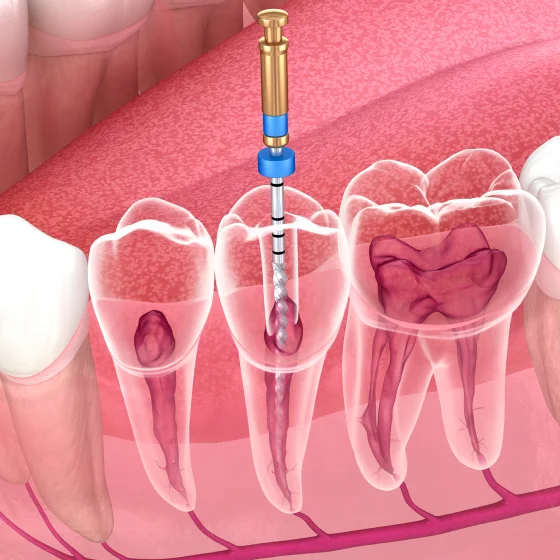
Root canal therapy is the most common reason patients come in for endodontic treatment, and the process is more straightforward than its reputation suggests. Here’s what a typical procedure looks like.
01. Numbing the Area
Local anesthetic is used to fully numb the tooth and surrounding tissue before any work begins.
02. Accessing the Pulp
A small opening is made in the top of the tooth to reach the infected or inflamed pulp inside.
03. Removing the Infected Tissue
The damaged pulp is carefully removed, and the empty canal is cleaned and shaped to prepare it for filling.
04. Filling and Sealing the Canal
The cleaned canal is filled with a biocompatible material and sealed to prevent future infection.
05. Restoring the Tooth
In most cases, a crown is placed afterward to protect the treated tooth and restore its full function, often as a same-day crown at our office.
Recovering After Root Canal Therapy
Most patients return to their normal routine the day after root canal therapy, since the procedure itself is done under local anesthesia and doesn’t typically require extended downtime. Mild soreness around the treated tooth is common for a few days afterward and usually responds well to over-the-counter pain medication. It’s a good idea to avoid chewing directly on the treated tooth until a permanent crown or other restoration is in place, especially if a temporary filling is holding things together in the meantime.
Most patients find that any pain or sensitivity that led them to seek treatment in the first place is significantly improved once the infected pulp has been removed. Following up as scheduled for your permanent restoration is an important part of protecting the tooth long-term.
Don’t Wait Out Tooth Pain
Persistent tooth pain is often a sign of a problem that needs attention, not something to push through on your own. Book online or call the Metropolitan Dental Arts office in Brooklyn to schedule an evaluation with our endodontic team.
Request an AppointmentFrequently Asked Questions About Endodontics
Modern root canal therapy is performed under local anesthesia, so the procedure itself is typically no more uncomfortable than getting a filling. Most of the pain patients associate with root canals actually comes from the infection beforehand, not the treatment.
Common signs include lingering sensitivity to hot or cold, pain when chewing, swelling near a specific tooth, or noticeable darkening of a tooth. An evaluation at Metropolitan Dental Arts can confirm whether root canal therapy is needed.
Many root canals are completed in a single visit at our Williamsburg office, though more complex cases may require two appointments. Your doctor will let you know what to expect based on your specific tooth.
In most cases, yes. A crown protects the treated tooth and restores its full strength, and our office can often provide a same-day crown to complete treatment in a single visit.
Retreatment is a second round of root canal therapy for a tooth that didn’t fully heal or developed a new problem after an earlier procedure. Our in-house endodontists handle these cases without requiring an outside referral.
An apicoectomy is a minor surgical procedure that treats infection at the very tip of a tooth’s root, typically recommended when standard root canal therapy or retreatment hasn’t resolved the issue.
Saving your natural tooth through root canal therapy preserves your natural bite and avoids the need for a bridge or implant down the road. Our team can walk you through your specific options during a consultation to help you decide what’s right for your situation.
Many dental insurance plans offer coverage for root canal therapy and related procedures, though the amount varies by provider. Our team at Metropolitan Dental Arts can help verify your specific benefits before treatment.