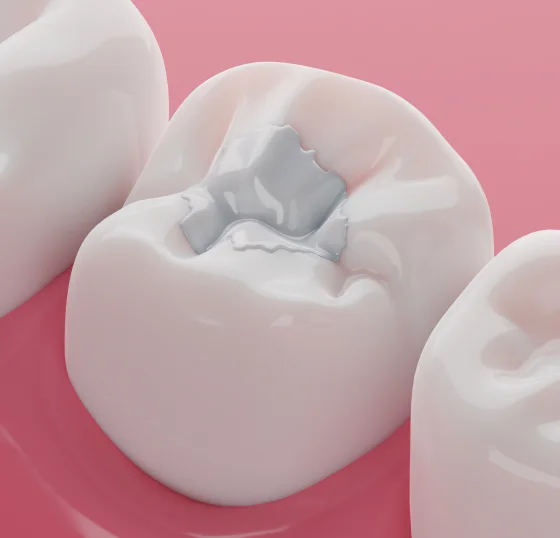
Fillings That Disappear Into Your Smile
A cavity doesn’t have to leave a visible mark on your smile. At Metropolitan Dental Arts, we use tooth-colored composite resin to repair cavities in a way that blends seamlessly with the tooth around it, so the treatment itself stays out of sight.
Patients in the Brooklyn area choose this option not just for how it looks, but for how well it holds up to everyday use. The material is shaded to match your natural tooth color before it’s ever placed, so the result looks like your tooth was simply never affected in the first place. Because composite resin bonds directly to the tooth, it can often preserve more of the natural structure while restoring a smooth, functional surface.
Schedule a Filling ConsultationWhat Tooth-Colored Fillings Are Made Of
Composite resin is a mixture of fine glass or quartz particles suspended in a durable plastic base, formulated to be shaded precisely to your natural tooth color. Before it’s placed, the material starts as a soft, moldable paste, which allows our doctors to shape it directly against the tooth for a close, custom fit. Once it’s positioned correctly, a curing light hardens the resin within seconds, locking it into place. The result is a filling that’s not only cosmetically matched to your smile but also bonds directly to the surrounding tooth structure, adding a bit of reinforcement to the tooth itself.
Why Patients Choose Composite Fillings
Beyond the way they look, tooth-colored fillings offer a few practical advantages worth knowing about.
- Blend naturally with the shade of your existing teeth
- Bond directly to the tooth for a close, secure fit
- Can often be completed in a single visit
- Suitable for both front and back teeth
- Made without metal, for a fully tooth-colored result
The Tooth-Colored Filling Process
Getting a cavity filled is a routine procedure, and most patients are in and out in well under an hour. Here’s what happens during a typical appointment.
01. Numbing the Area
A local anesthetic is used to numb the tooth and surrounding tissue, so the procedure is comfortable from start to finish.
02. Removing Decay
The dentist carefully removes any decayed portion of the tooth, leaving as much healthy structure in place as possible.
03. Preparing the Tooth
The area is cleaned and prepared to help the composite resin bond securely once it’s applied.
04. Shaping the Filling
The soft composite material is layered into the prepared area and shaped to match the natural contour of your tooth.
05. Curing and Polishing
A curing light hardens each layer of resin, and the filling is polished so it blends smoothly with the surface of your tooth.
After Your Filling
Most patients return to normal activities right after a filling, since the procedure doesn’t typically require significant recovery time. If you were numbed for the procedure, it’s a good idea to wait until the numbness fully wears off before eating so you don’t accidentally bite your cheek or tongue.
Some mild sensitivity to hot or cold is common for a day or two afterward and usually resolves on its own. Brushing and flossing can continue as normal once any numbness has faded, and the filling is fully hardened before you leave the office, so there’s no need to avoid chewing on that side of your mouth. If sensitivity lingers beyond a week or you notice any discomfort when biting down, give our office a call so we can take a look.
When a Tooth-Colored Filling May Be Recommended
During an exam at Metropolitan Dental Arts, the dentist will evaluate the tooth and recommend the appropriate option based on its condition.
Composite fillings may be used to treat:
- Small to moderate cavities
- Minor chips or worn edges
- Dark or worn existing fillings
- Cracks that do not require a crown
- Teeth with early decay found during a routine exam
Get Your Cavity Treated Without the Metal Look
If you’ve noticed a cavity or it’s been a while since your last exam, don’t wait for it to get worse. Book online or call our dental office in Brooklyn to schedule a filling consultation.
Request an AppointmentFrequently Asked Questions About Tooth-Colored Fillings
With consistent brushing, flossing, and routine dental care, composite fillings often last five to ten years. Lifespan can vary based on the filling’s size, bite pressure, and daily wear.
No. The treatment area is numbed with a local anesthetic before the filling is placed. Most patients at Metropolitan Dental Arts remain comfortable throughout the procedure.
Yes. Composite fillings are commonly used on molars and other back teeth, as well as front teeth. The Metropolitan Dental Arts team selects the appropriate material based on the tooth’s location and the amount of restoration needed.
The filling is hardened before you leave our Williamsburg dental office. You can eat once numbness from the anesthetic has worn off, usually within a few hours.
Yes. Composite resin is shade-matched to blend with the surrounding tooth enamel, allowing the filling to look natural when you smile, talk, or laugh.
Often, yes. Patients from Williamsburg, Greenpoint, Bushwick, and nearby Brooklyn communities can schedule an exam at Metropolitan Dental Arts to determine whether an older filling can be safely replaced with composite resin.
Many dental insurance plans cover composite fillings, especially when they are used on visible teeth. Coverage depends on the specific plan, and our Brooklyn office can help review your benefits before treatment.
Possible signs include tooth sensitivity, visible dark spots, a rough area, food catching between teeth, or discomfort when biting. Routine exams at Metropolitan Dental Arts can also identify early cavities before noticeable symptoms develop.