A Simple Way to Guard Your Molars Against Decay
Molars do a lot of the heavy lifting when it comes to chewing, and their deep grooves and pits make them some of the hardest teeth to keep clean, even with a solid brushing routine. At Metropolitan Dental Arts, we apply dental sealants as a straightforward way to close off those hard-to-reach areas before decay has a chance to take hold.
Patients throughout Williamsburg, Greenpoint, and the wider Brooklyn area choose sealants as a low-effort, high-value addition to their preventive care, whether for a child’s new molars or an adult prone to cavities. The process takes just minutes per tooth and requires no drilling or anesthesia.
Ask About SealantsWhat Are Dental Sealants?
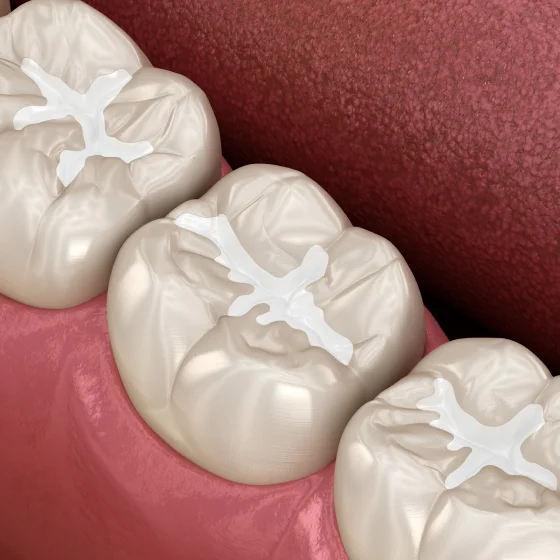
A dental sealant is a thin, tooth-colored coating painted directly onto the chewing surface of a back tooth. Once applied, it flows into the deep grooves and pits of the molar, creating a smooth barrier that’s far easier to keep clean than the natural tooth surface underneath. Sealants are typically placed on permanent molars soon after they come in, since that’s when those teeth are most vulnerable to decay, though adults without existing sealants can benefit from them too. A properly placed sealant can last for several years before it needs to be checked or reapplied.
Who Benefits Most from Sealants
Sealants aren’t limited to one age group. A few types of patients tend to benefit the most.
- Children and teens with newly erupted permanent molars
- Adults with deep grooves or pits in their back teeth
- Patients with a history of frequent cavities
- Anyone who has difficulty reaching certain back teeth with a toothbrush
During a routine exam, our team can tell you whether your molars are a good candidate for sealants and walk you through what the process would involve.
How Dental Sealants Are Applied
Placing a sealant is one of the quickest procedures we offer, and most patients are surprised by how simple the process actually is. Here’s what happens from start to finish.
01. Cleaning and Preparation
The tooth being sealed is cleaned thoroughly and dried, making sure no plaque or debris is trapped underneath the sealant before it’s applied.
02. Etching the Surface
A mild acidic solution is applied briefly to slightly roughen the tooth’s surface. This step helps the sealant bond securely once it’s placed, and the solution is rinsed away shortly after.
03. Applying the Sealant
The liquid sealant material is painted directly into the grooves and pits of the tooth, flowing into every crevice a toothbrush would normally struggle to reach.
04. Curing the Material
A special curing light hardens the sealant in seconds, turning it into a durable, solid coating that’s ready to withstand normal chewing right away.
05. Final Check
The dentist checks your bite to make sure the sealant feels comfortable and doesn’t interfere with how your teeth come together, adjusting it if needed before you leave.
Caring for Sealed Teeth
Caring for a sealed tooth is no different from caring for the rest of your smile. Regular brushing and flossing still matter, since sealants protect the chewing surface of a tooth but not the sides or the gumline. Sealants are also checked at your routine cleanings and exams, so our team can detect and repair any chipping or wear early rather than letting it go unnoticed.
Most sealants hold up well for several years, though how long they last can depend on diet, bite pressure, and general oral hygiene. If a sealant does wear down or come loose, it can typically be reapplied quickly during a regular visit.
Why Back Teeth Need Extra Protection
Back teeth are where many cavities begin because their narrow grooves can hold onto food particles and bacteria long after brushing. Dental sealants create a smooth protective layer over those grooves, making the chewing surfaces easier to clean during daily brushing.
This added protection is especially helpful as permanent molars come in. Sealants work alongside fluoride, brushing, flossing, and regular dental cleanings to support long-term cavity prevention.
Protect Your Molars Before Decay Starts
Sealants are often added during a routine cleaning and exam, so there’s rarely a need for a separate appointment. Book online or call our Williamsburg dental office in Brooklyn to find out if sealants are a good fit for you or your child.
Book OnlineFrequently Asked Questions About Dental Sealants
No. Dental sealants at Metropolitan Dental Arts do not require drilling, needles, or anesthesia. Most patients feel only a slightly rough texture while the tooth surface is prepared before the sealant is placed.
Dental sealants often last several years with normal wear. During routine cleanings and exams at our Williamsburg, Brooklyn, office, the team checks each sealant and can repair or reapply it if needed.
No. Sealants are commonly placed on children’s new permanent molars, but adults with deep tooth grooves or a history of cavities may benefit as well. Patients from Williamsburg, Greenpoint, and across Brooklyn can ask whether sealants are appropriate during a preventive visit.
A sealant can chip or wear away over time, especially with teeth grinding or heavy chewing. Regular dental checkups help the Metropolitan Dental Arts team notice wear early and restore the protective coating when needed.
No. Dental sealants protect the chewing surfaces of back teeth, but they do not cover the sides of teeth or the gumline. Daily brushing, flossing, and routine cleanings remain essential for maintaining oral health.
Sealants are most often placed on molars and premolars. These back teeth have deep grooves that can trap food and bacteria, making them more difficult to clean with a toothbrush alone.
Many dental insurance plans cover sealants for children, although coverage varies by plan and age. Metropolitan Dental Arts can help patients in Brooklyn review available benefits before treatment.
You can eat normally right after the appointment. The sealant is hardened with a curing light at our Brooklyn dental office, so it is ready for regular chewing before you leave.